
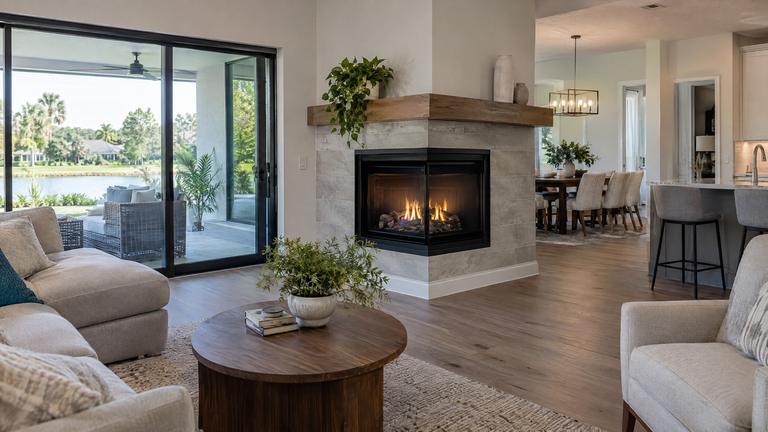
Gas fireplace venting checked and repaired in Eagle Creek
Get your gas fireplace breathing right again. Call our local venting pros in Eagle Creek for a free inspection and an honest repair plan.
- Licensed & insured
- Locally run
- Family owned and operated
- Same-day service available



Inside your gas fireplace vent quote in Eagle Creek
Our venting pros look at these items in person in Eagle Creek, then carry every one into the written proposal.
- Run length compared with the maker's vent graph
- B-vent height above the roof and above the draft hood
- Listed replacement parts named for your model
- Test burn and flame check after the repair
How we handle gas fireplace venting in Eagle Creek
What our venting specialists explain to homeowners in Eagle Creek before any pipe is replaced.
Sidewalks and driveways under the cap
People walk and park under sidewall caps more often than owners realize. One maker asks for 7 feet of clearance above a paved sidewalk or driveway on public property, and it rules out a cap directly above a paved sidewalk or driveway that sits between two single-family homes and serves both.
Our crew checks what sits below and in front of your cap, including side yards between houses, and writes down any location the chart does not allow.
A natural-vent fireplace that shuts down early
When a B-vent unit runs for a while and then shuts itself off, one maker's troubleshooting table points to a blockage or restriction in the venting. The fix it gives is to remove the blockage and relight the pilot following the lighting instructions.
Finding that blockage is the real work. Our crew checks the cap, the reachable pipe and any enclosure around the top, and if nothing turns up there, the draft checks and the controls come next.
Height and offset limits for co-linear liners
Liners in a chimney still follow vent rules. One maker's co-linear instructions call for no less than 10 feet and no more than 40 feet of vertical pipe, and allow offsets of up to 8 feet with the liners held at least 45 degrees from horizontal.
The same instructions say no restrictor is needed with co-linear venting, which differs from the rules for its coaxial pipe. Our crew measures the chimney height and any bends in the flue before quoting, since a chimney that falls outside those numbers needs a different plan.
Why a missing odor does not prove there is no gas
Natural gas and propane have no smell of their own. One maker's manual explains that an odor-making agent is added to both so people can notice a leak, and it warns that the added odor can fade, so gas may be present even when nothing can be smelled.
That is one reason manuals ask for gas connections to be leak tested after service with a soap solution or an approved leak test spray and never with an open flame. Our technicians test every connection they disturb before leaving.
A cap that sits below the soil line
Below-grade terminations need drainage. For a vent that ends below ground level, one maker recommends a window well with adequate and proper drainage around the termination area, with gravel below and no backfill against the snorkel.
A well that fills with leaves or water can block the cap. Our crew checks the well, the drain and the clearance around the snorkel and writes down any cleanup or repair needed to keep the termination open.
Other work in Eagle Creek
-
-
-
-
-
-


Gas fireplace venting questions from Eagle Creek
Straight answers on vents from our specialists in Eagle Creek, with no pressure to book.
Can you move the vent cap when we remodel?
Often, yes, but it is treated as a new installation of the vent. The new route has to fit the vent graph, the elbow limits and the termination clearances. Wall, roof and finish work are listed separately on the estimate.
Can attic insulation touch the vent pipe?
No. One maker asks for air space all around the pipe and warns against packing it with insulation, which can cause high temperatures. Where the pipe passes into an attic, a firestop or insulation shield keeps that space open.
Request your free estimate
Share the job details and arrange a free inspection with our local team.
- Free inspection
- No hidden fees
- Family owned and operated
Need an answer now? Call (352) 675-6376
Your request is received
Thank you. We will contact you to discuss the job and confirm an appointment.