
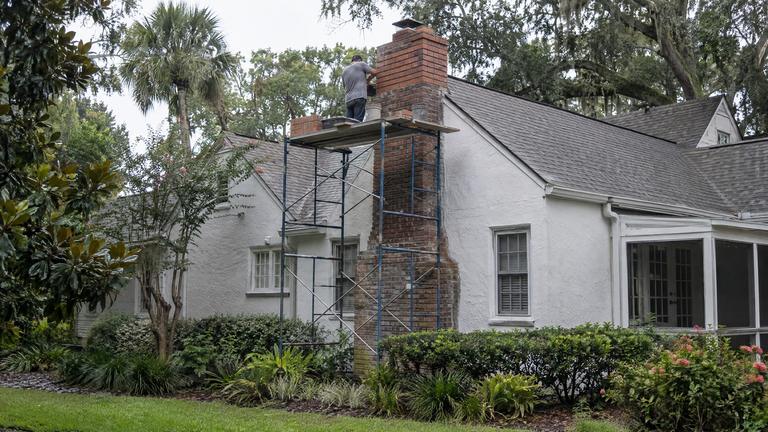
Chimney rebuilding from sound masonry up in Fullers
From roof protection to the final cap, one family crew handles the whole chimney rebuild in Fullers.
- Licensed & insured
- Locally run
- Family owned and operated
- Same-day service available



The rebuild plan our Fullers crew writes up
Our specialists confirm these details on the roof in Fullers and list them in the proposal you sign.
- Crown or cap with drip edge and bond break
- Flue liner kept, replaced or relined
- Access by roof, ladder or staging
- Original brick sorted for reuse
How our crew approaches a chimney rebuild in Fullers
Each point below changes the rebuild we recommend in Fullers, and each one appears in the written proposal.
A gap opening between chimney and house
A widening gap where the chimney meets the siding or roof means the chimney and the house are moving differently. Caulking the gap closes it for appearance only. The question is whether the chimney is settling, tilting or pulling away at the top.
We measure the gap at several heights on your Fullers home and look at the flashing, the base and the attic side. The written findings describe what is moving and what a repair would have to address, whether that is a partial rebuild or a larger structural step.
Solid walls at least 4 inches thick
Section R1003.10 of the Florida Residential Code calls for masonry chimney walls built of solid units, or hollow units grouted solid, with at least a 4-inch nominal thickness. The wall thickness is part of what protects the house from the heat inside the flue.
Rebuilt courses on your Fullers chimney are laid to that standard. Where an existing section was built thinner or with ungrouted hollow units, we tell you what we found and how the rebuild addresses it, rather than stacking new work on a weak base.
Fireblocking where the chimney passes floors and ceilings
Section R1003.19 requires the spaces between a chimney and the floors and ceilings it passes through to be fireblocked with noncombustible material, securely fastened in place. The blocking closes the gap without touching the chimney to framing.
When a rebuild reaches the attic of your Fullers home, we check whether fireblocking is present and intact at the ceiling line. If it is missing or was disturbed by earlier work, the estimate includes restoring it. Our crew uses noncombustible material for any blocking it restores, fastened so it stays put.
Hard patches on softer brick
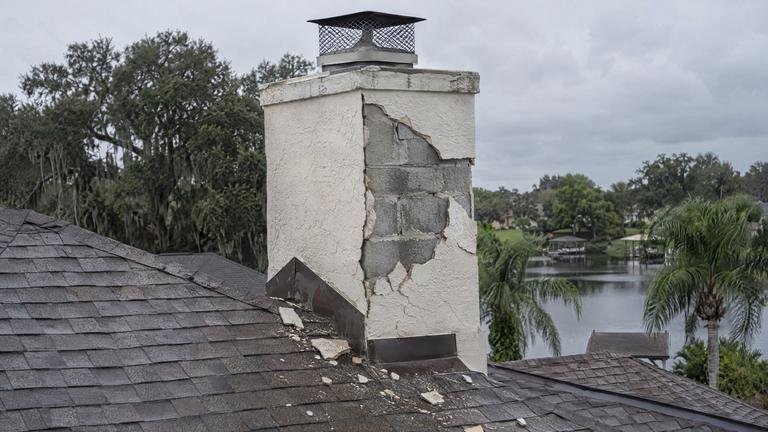
Earlier repairs sometimes used a very hard mortar or a cement smear over the joints. Preservation Brief 2 explains that mortar stronger than the units makes stresses relieve through the brick, which is how brick edges and faces break around a hard patch.
If your Fullers chimney shows damaged brick around old patching, that history shapes the rebuild. We remove the hard material within the boundary and choose new mortar compatible with the brick, so the problem is not built back into the new work.
Other work in Fullers
-
-
-
-
-


What Fullers homeowners ask before a rebuild
Still weighing a rebuild? The inspection in Fullers costs nothing.
Does a rebuild mean taking the whole chimney down?
Rarely. Most rebuilds take down only the failed upper section to sound masonry and relay it. We show you where the boundary falls on your Fullers chimney and why before any work is approved.
What mortar do you use for rebuilt courses?
We choose a mortar type suited to the brick and to the older masonry it joins, following industry guidance to use the lowest strength that meets the job. The type is named in the estimate.
Request your free estimate
Share the job details and arrange a free inspection with our local team.
- Free inspection
- No hidden fees
- Family owned and operated
Need an answer now? Call (352) 675-6376
Your request is received
Thank you. We will contact you to discuss the job and confirm an appointment.