
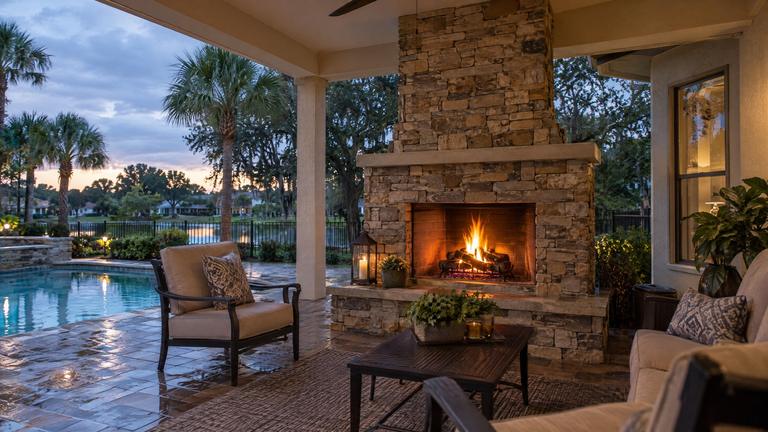
Chimney chase repair for Lake Dot homeowners
We repair rotted chase framing, siding and stucco, then close the water path. Free inspection, then 10% off any service booked within 72 hours after it.
- Licensed & insured
- Locally run
- Family owned and operated
- Same-day service available



What your chase estimate lists in Lake Dot
- Moisture readings across each face of the chase
- Two-layer barrier behind stucco on wood sheathing
- Rotted studs, plates and corners replaced or sistered
- Seam and flashing where the chase meets the house
Chimney chase repair, explained for Lake Dot homeowners
Rot along the top plate under the cover
The top plate is the horizontal framing at the very top of the chase walls. The metal cover rests on it, and it is the first wood to get wet when the cover leaks or rain blows past the edge. Rot often starts at the corners, where end grain soaks up water.
A soft top plate lets the cover sag, which holds more water and speeds up the rot. It can also pull fasteners loose from the siding just below it.
We check the top plate by hand whenever the cover is off. If it is soft, the plate and the upper ends of the studs are replaced before any cover goes back on. The cover shows up as its own line, so you can tell which job stops the leak and which one repairs the wood it already reached.
Insulation that has no place against the pipe
Homeowners sometimes stuff insulation into a chase to stop drafts or noise, and some chases were insulated when they were built. That insulation can end up packed against the chimney pipe. DuraVent's manual, as one example, says never to fill the clearance space with insulation and to keep building insulation away from the chimney.
Wet insulation can also hold water against the sheathing and framing, which speeds up rot on the inside faces of the chase walls. It can leave the back of the siding damp long after the outside looks dry.
When we open a chase, any insulation inside is checked by hand, including any packed above or below the opened section. Material in the clearance space comes out, and wet insulation is removed. Insulation that belongs in the chase walls stays in the stud bays, outside the clearance, and the estimate says what was removed and what stayed.
The insulation shield at an insulated attic
When a factory-built chimney passes through an insulated attic, the insulation has to be held back from the pipe. Florida's code, in R1005.8, calls for an insulation shield that keeps insulation at the clearance the chimney maker specifies, and where the chimney passes through attic space, the shield ends above the insulation.
DuraVent's DuraChimney II manual, as one example, calls for its attic insulation shield where the chimney passes into an attic, unless the chimney is fully enclosed through the attic. The same maker's DuraTech instructions say an installed shield must be high enough to cover current or future insulation. Insulation added in later years is worth checking against the shield height.
On roof-mounted chases, our technicians look at the attic side of the chimney during the inspection when it can be reached. A missing or buried shield is written up with the chase repair, since the two share the same opening.
Sequencing chase repair with a new cover
When the cover has failed and the chase under it has rotted, the order of work matters. The rotted top framing is repaired first, the siding and barrier are finished up to the top plate, and then the new cover goes on over sound wood.
Putting a new cover on a rotted top plate means taking it off again later. It also means paying to open the top of the chase twice. Repairing the chase and leaving a failed cover in place means the new wood gets wet right away.
Cover replacement is its own job with its own line on the estimate, and we schedule it right after the top framing is sound. You see both lines side by side, so you can decide on each and know the order they will happen in. If the top framing needs no repair, the cover can go on as soon as the siding reaches the top plate.
Other work in Lake Dot
-
-


Chase repair questions we hear
Do I need a new cover on top when the chase is repaired?
Only if the cover has failed or no longer fits the repaired top. When it has, the cover goes on its own estimate line and is installed after the top framing is sound. If the cover is in good shape, we take it off carefully and put it back.
Is there a 10% discount for chase work?
Yes. Chase repair booked within 72 hours after your free inspection is 10% off. Mention it when you book so it is applied to your chase work.
Request your free estimate
Share the job details and arrange a free inspection with our local team.
- Free inspection
- No hidden fees
- Family owned and operated
Need an answer now? Call (352) 675-6376
Your request is received
Thank you. We will contact you to discuss the job and confirm an appointment.