
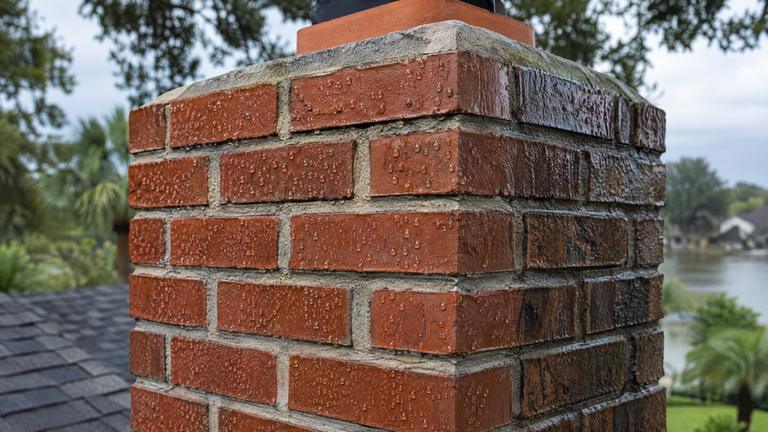
Sound masonry chimneys waterproofed in Lake Whippoorwill
Keep rain from soaking into your chimney brick. Local pros in Lake Whippoorwill prepare the surface properly, and work booked within 72 hours is 10% off.
- Licensed & insured
- Locally run
- Family owned and operated
- Same-day service available



Waterproofing details we put in writing in Lake Whippoorwill
These items keep a waterproofing job in Lake Whippoorwill from sealing in a problem that needed a repair.
- Open, cracked or eroded mortar joints to repair first
- Spalled or cracked brick that needs replacing before treatment
- Which chimney faces receive the repellent
- Product name, chemistry and maker's data sheet
Before a repellent goes on chimneys in Lake Whippoorwill
Straight answers about chimney sealing in Lake Whippoorwill, from the people who do the work.
What chimney waterproofing actually is
Chimney waterproofing is a clear masonry water repellent soaked into the outside of the brick, mortar or stucco. It is not paint, and it is not a glossy film sitting on the surface. The product lines the pores just below the face so rain beads and runs off instead of wicking in.
Done well, the chimney looks almost the same afterward and still lets water vapor escape from inside the masonry. Our crew names the exact product on your estimate, so you can read its data sheet and see what it is made to do before you approve the work.
Why we avoid film-forming sealers
Acrylics, stearates, waxes and urethanes form a film on the surface of the masonry. They can stop rain at the face, but they also slow evaporation from inside. When water gets behind them, the result can be a cloudy white haze, trapped salts and brick faces that flake away.
Those risks are why masonry guidance discourages film formers on exterior brick walls. Our crew does not put them on chimneys. If you already have a glossy film on yours, we explain what it means for any new treatment and whether the old coating needs to wear off or be removed first.
Temperature limits for chimney treatments
Repellents have a working temperature range. Product instructions for ChimneySaver water-base ask for surface and air temperatures between 40 and 100 degrees Fahrenheit for three hours after application, and the Brick Industry Association notes similar limits for most coatings.
A chimney face in full afternoon sun can run much hotter than the air around it, so we pay attention to the surface as well as the forecast. On hot days we plan the work for cooler hours or shaded faces. The goal is a product that soaks in and cures as its maker intended, not one that flashes off a baking brick.
Which chimney faces get treated
Not every chimney needs every face treated. A short stack above the roof may take weather on all four sides, while a full-height exterior chimney may show damp on one face and stay sound on the others. We decide by what the inspection finds, not by habit.
Your estimate lists each face and how far down the chimney the treatment runs. That way you know exactly what you are paying for, and if a face was left untreated on purpose, the reason is written next to it. Clear scope is how we keep our 100% satisfaction guarantee meaningful.
Other work in Lake Whippoorwill
-
-
-
-
-
-


Learn more about chimney waterproofingLake Whippoorwill services
Waterproofing answers for Lake Whippoorwill homeowners
Our family-owned team in Lake Whippoorwill answers the questions that come up on sealing jobs.
Will waterproofing stop the water in my fireplace?
Only if the water is soaking through the chimney masonry. Water in the firebox often comes down an uncapped flue or through a cracked crown or failed flashing, and a repellent fixes none of those. Our inspection finds the path first, and the estimate names the repair that stops it.
Why not use a glossy sealer on the chimney?
Film-forming products such as acrylics, waxes, stearates and urethanes can stop rain at the face but slow drying from inside. Water that gets behind them can leave a white haze, trapped salts and flaking brick, and masonry guidance discourages them on exterior brick. We use breathable penetrating repellents instead.
Request your free estimate
Share the job details and arrange a free inspection with our local team.
- Free inspection
- No hidden fees
- Family owned and operated
Need an answer now? Call (352) 675-6376
Your request is received
Thank you. We will contact you to discuss the job and confirm an appointment.