
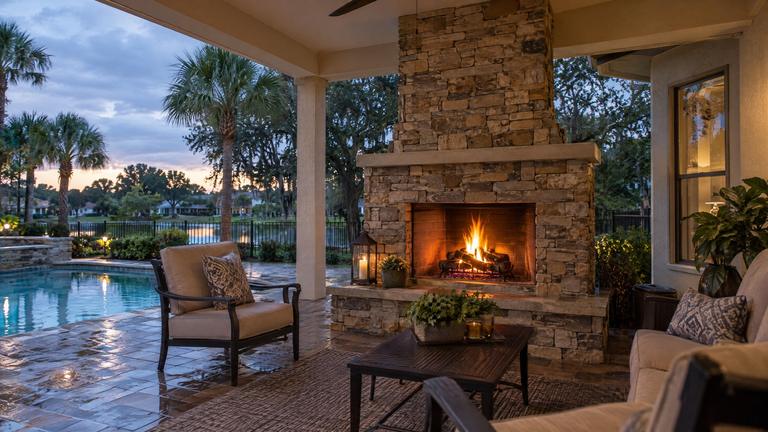
Firebrick and firebox repair for Mills 50 homes
Plain answers from local experts, a written estimate first and our satisfaction guarantee once the brick is laid.
- Licensed & insured
- Locally run
- Family owned and operated
- Same-day service available



Firebrick, joints and lining, itemized
- Medium-duty refractory mortar for joints
- Firebrick matched to the existing lining size
- Full firebox rebuild when walls have failed
- Curing and first-fire guidance in writing
Firebox repair in Mills 50, from brick to mortar
Thin joints between firebricks
Firebox joints are meant to be thin. The Florida residential code, section R1001.5, limits the joints between firebricks to no more than a quarter inch wide. Thin joints put more of the heat against the brick and less against the mortar.
Past repairs sometimes leave wide, smeared joints where a patch filled a gap instead of a brick being reset. We check joint width as part of the free inspection and explain whether resetting or replacing brick would bring the lining back to a sound, tight pattern.
A back wall that leans or bulges forward
A back wall that has bowed toward the room is more than a cosmetic problem. It usually means the lining has separated from the masonry behind it, often after years of heat and moisture working on the joints.
Our technicians check how far the wall has moved and whether the lining can be taken down and relaid or the whole back needs rebuilding. The fireplace should stay unused until then, and the written estimate explains the scope and what stays in place.
Soft joints found with a probe
A joint can look complete and still be soft. Our technicians run a probe along the joints to find mortar that crumbles, gaps that run behind the face and sections that have already washed out.
What the probe finds decides whether repointing is enough. Sound joints stay. Soft ones are raked out and refilled, and the estimate describes the extent in plain words instead of a guess.
A written record of the repair
After a firebox repair, you get a job sheet listing the areas repaired, the number of bricks replaced, the joints repointed and the products used, with their curing and first-fire guidance.
Keep it with your home records. If a crack appears later, its location against that record shows whether it is in the repaired area or somewhere new, which makes the next conversation quick and clear.
A fireplace used only a few times a year
Many fireplaces are lit only on the cooler evenings of the year. Light use is kind to the firebox, but moisture and time still work on the joints between those fires.
An occasional look is still worth it. Our technicians inspect lightly used fireboxes the same way as busy ones, and the free inspection tells you whether yours is ready or needs attention first.
Other work in Mills 50
-
-
-
-
-
-


Firebox repair FAQs for Mills 50
How soon can I use the fireplace after a firebox repair?
It depends on the refractory product used. Its data sheet sets the drying time and any first-fire steps, and we write that guidance on your job sheet. A repair should not be used just because it looks dry.
How often should the firebox be checked?
NFPA 211 calls for fireplaces and chimneys to be inspected at least once a year, and the firebox is part of that check. A yearly look catches worn joints and cracked bricks while the repair is still small.
Request your free estimate
Share the job details and arrange a free inspection with our local team.
- Free inspection
- No hidden fees
- Family owned and operated
Need an answer now? Call (352) 675-6376
Your request is received
Thank you. We will contact you to discuss the job and confirm an appointment.