
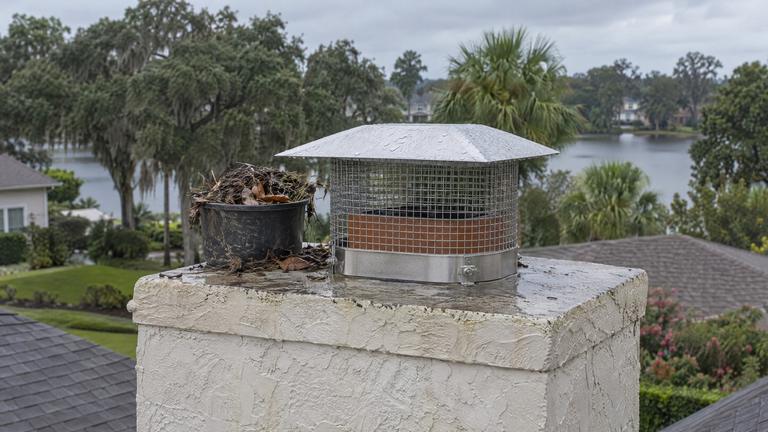
Animals in the chimney? Removal help in Plymouth
From the first sound in the flue to the new cap on top, one family-owned team handles your Plymouth chimney animal problem.
- Licensed & insured
- Locally run
- Family owned and operated
- Same-day service available



Inside the chimney animal plan for Plymouth
- Assessment of the animal and any nesting
- Crown or chase cover gaps noted
- Written record of the work
- 10% off any service booked within 72 hours
Chimney animal work in Plymouth homes
Branches that give animals a route
Squirrels, raccoons and other climbers reach a roof along overhanging branches. A limb that touches the roof near the chimney is a ladder to the flue. Trimming branches back from the roofline makes the chimney harder to reach and cuts the debris that collects on the cap. We point out limbs that concern us during the inspection so you can have them trimmed. Keep trimmed limbs several feet from the roof, since squirrels can jump a surprising distance.
When a storm loosens or removes the cap
Strong wind can loosen a cap, tear its screen or carry it off the chimney, leaving the flue open. After a storm, look at the chimney top from the ground. If the cap is missing or tilted, keep the damper closed and call for an inspection. We confirm nothing moved in while the flue was open and then replace or refasten the cap. A cap that has shifted once may need different fasteners so it stays put the next time.
The screen also stops embers
The screen on a cap does two jobs. It keeps animals out, and on a wood-burning chimney it catches larger embers before they leave the flue. A torn screen fails at both. That is one more reason to replace a damaged screen promptly and to size it to the code range, which balances protection against keeping the flue open enough to draw. We check both jobs of the screen whenever we inspect the cap. On a wood-burning fireplace, a torn screen can also let larger embers land on the roof around the chimney.
Nest material leaves with us
Nest material, droppings and debris from the flue, the smoke shelf and the firebox are bagged and hauled away when we finish, not left in your trash or on the lawn. Droppings are handled with care, since the CDC notes that disturbing bird and bat droppings can release the spores that cause histoplasmosis. The area around the fireplace is protected while we work, and we clean up before we leave.
Other work in Plymouth
-
-
-
-


What Plymouth owners ask about animals in chimneys
Are chimney swifts protected?
Yes. The Migratory Bird Treaty Act protects chimney swifts, and an active nest of theirs cannot be taken out. The chimney is cleaned and capped after the birds have left for the season.
Is it legal to catch the animal and let it go elsewhere?
Florida's rule on nuisance wildlife, F.A.C. 68A-9.010, lets a property owner, or someone the owner authorizes, remove nuisance wildlife only by permitted methods, and it limits where a live-caught animal can be released. Bats and nesting birds come with separate limits, so we bring in a wildlife specialist when one is needed.
Request your free estimate
Share the job details and arrange a free inspection with our local team.
- Free inspection
- No hidden fees
- Family owned and operated
Need an answer now? Call (352) 675-6376
Your request is received
Thank you. We will contact you to discuss the job and confirm an appointment.