
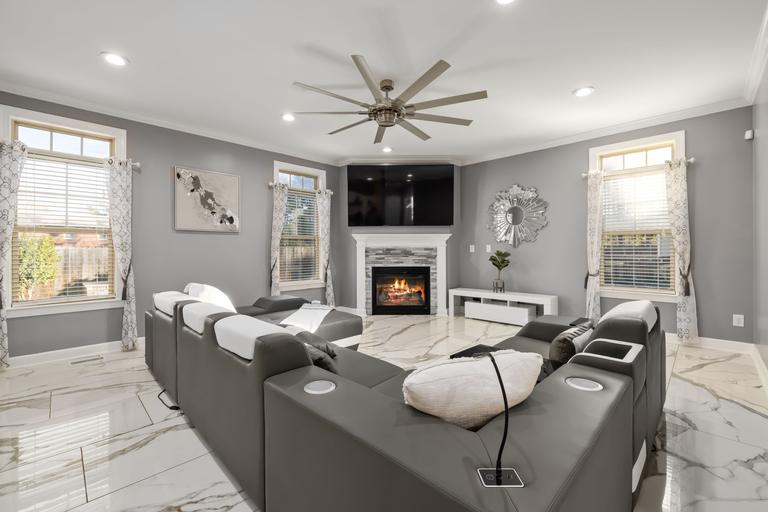
Family-owned chimney chase repair in Richmond Estates
Rebuild or repair, our family team prices both for Richmond Estates homes and backs the work with a 100% satisfaction guarantee.
- Licensed & insured
- Locally run
- Family owned and operated
- Same-day service available



Chase work written up for Richmond Estates homeowners
- Damage boundary marked on each face
- Top plate and framing under the cover
- Cover replacement listed as its own line
- Added work priced in writing before it starts
Building a chase back the right way
The layers that make up a chase wall
Every chase wall is a stack of parts, and each one fails in its own way. Knowing the stack helps you read an estimate and ask sharper questions before anything gets torn off.
Water usually gets through the outer finish first, then soaks the barrier, the sheathing and finally the studs. Repairing only the outside layer leaves the rest of that stack wet.
Our crew checks the layers in order and writes down where the damage stops in each one. That is also why our estimate is written layer by layer. From the inside out, a typical chase is built like this.
- Framing, the studs and plates that give the box its shape
- Sheathing, the plywood or strand board nailed over the studs
- A water-resistive barrier, then siding or stucco and trim
- The top plate and framing that sit under the metal cover
Rot along the top plate under the cover
The top plate is the horizontal framing at the very top of the chase walls. The metal cover rests on it, and it is the first wood to get wet when the cover leaks or rain blows past the edge. Rot often starts at the corners, where end grain soaks up water.
A soft top plate lets the cover sag, which holds more water and speeds up the rot. It can also pull fasteners loose from the siding just below it.
We check the top plate by hand whenever the cover is off. If it is soft, the plate and the upper ends of the studs are replaced before any cover goes back on. The cover shows up as its own line, so you can tell which job stops the leak and which one repairs the wood it already reached.
Swollen or crumbling sheathing behind the siding
Sheathing is the layer of plywood or strand board nailed to the chase studs. It closes the box and gives the siding something to hold. Wetting that happens again and again can leave it swollen, soft or coming apart in layers.
Swollen sheathing can push the siding out, which is why bulges and wavy siding lines tend to show up first. Nails can lose their grip in soft sheathing, and the siding then starts to rattle or pull loose in wind.
We cut sheathing out back to firm wood at the stud lines and replace it with new panels, fastened as the panel maker directs. The estimate lists sheathing by face of the chase, so you can see how much of the box needed new panels. New sheathing is kept dry until the barrier covers it, and every new panel edge lands on framing.
Ladders and scaffolding for tall chases
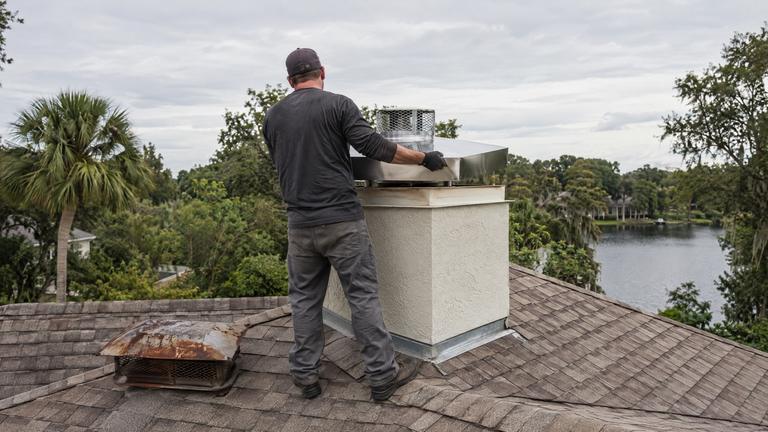
A chase on a two-story home can reach well above the second-floor eave, and working on it safely takes the right setup. Some jobs can be done from ladders and roof anchors. Others need scaffolding set on the ground or on a lower roof. Roof pitch, roof material and where the chase sits on the house all change the setup.
Scaffolding takes longer to set up, but it lets the crew reach every face of a tall chase with both hands free, which matters when a whole face is being stripped and reframed. It also keeps ladders off gutters and fresh siding.
Our crew plans access at the inspection and includes it in the estimate as a line of its own, so the day of the job holds no surprises. We protect landscaping and walkways wherever ladders and scaffolding stand at your Richmond Estates home.
Other work in Richmond Estates
-
-
-
-
-


Learn more about chimney chase repairRichmond Estates services
Quick answers on chimney chase repair
Do I need a new cover on top when the chase is repaired?
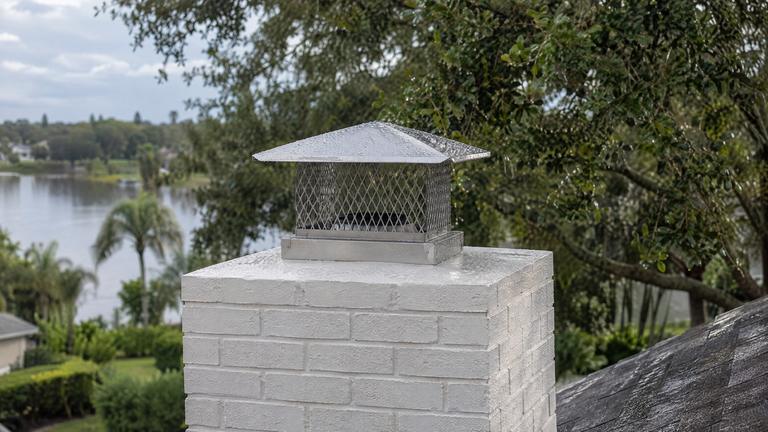
Only if the cover has failed or no longer fits the repaired top. When it has, the cover goes on its own estimate line and is installed after the top framing is sound. If the cover is in good shape, we take it off carefully and put it back.
Will I be able to use my fireplace during the repair?
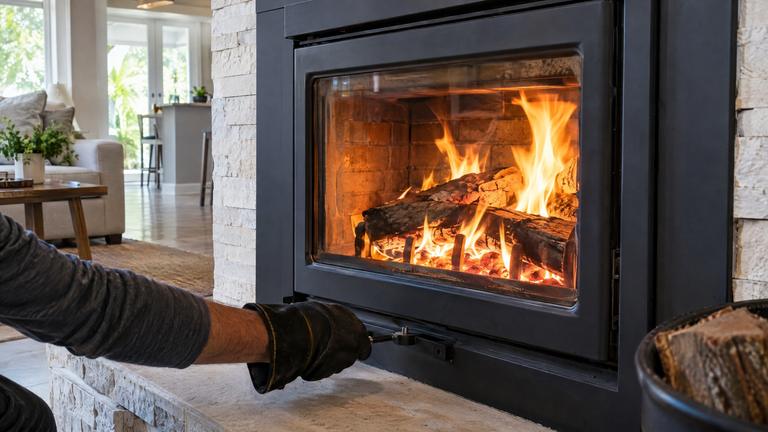
No. While the chase is open, shields, firestops and the top may be off, so the fireplace stays out of use. We tell you when it is ready again, which is after the chase is closed and the listed parts are back in place.
Request your free estimate
Share the job details and arrange a free inspection with our local team.
- Free inspection
- No hidden fees
- Family owned and operated
Need an answer now? Call (352) 675-6376
Your request is received
Thank you. We will contact you to discuss the job and confirm an appointment.