
Chimney sweep and fireplace cleaning in Robinswood
Every sweep in Robinswood ends with a visual check and a written record you keep.
- Licensed & insured
- Locally run
- Family owned and operated
- Same-day service available



The work behind a clean flue
- Debris bagged and carried out of the house
- Visual check of everything the brushes reached
- Glazed creosote treatment quoted as its own line
- Top-sealing damper gasket and cable checked
Our approach to chimney sweeping in Robinswood
The return visit after a glazed-deposit treatment
A glazed treatment is a two-part job. Once applied, it has to dry in the flue before anything else happens, and the label recommends keeping rain off it while it dries. Some of the dried material drops on its own onto the smoke shelf and into the firebox. The rest comes down with a normal sweep on the return visit.
Very heavy glazed deposits may need a second application before the flue is clean. The label also calls for the cleaned lining to be checked for cracked tile and damaged mortar joints before the fireplace goes back into use, since a thick coating can hide both.
Both visits are scheduled when you approve the work, and we ask you to leave the fireplace unused in between. After the final sweep you get the lining findings in writing.
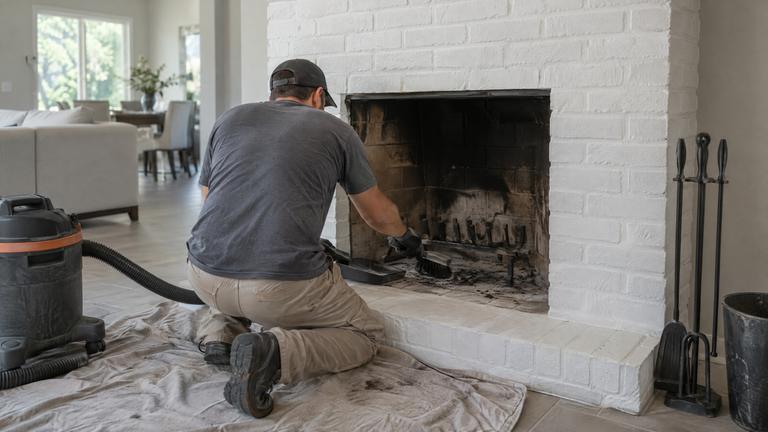
Clearing ash, grate and debris from the firebox
The firebox is where the sweep starts and ends. Before any brushing, our technicians remove the grate, andirons and old ash, so the floor and walls can be seen and the debris from above has somewhere clean to land.
After the flue and smoke chamber are done, the firebox gets cleaned again. The walls are brushed down, the floor is scraped and vacuumed, and any ash dump door in the floor is opened and checked. The grate and andirons are brushed off outside, so their soot stays out of the room, and go back in place last.
With the firebox clean, the firebrick and the mortar joints between the bricks are easy to see. Cracked bricks or open joints are fireplace repair work, and our crew notes them on your written estimate instead of hiding them under a fresh cleaning.
Dry, split, seasoned wood stored off the ground
Wet wood burns smoky, and EPA guidance links unseasoned wood directly to creosote buildup, since the fire spends its energy driving off water and makes more smoke doing it. The guidance is plain. Burn only dry, split, well-seasoned wood, and skip anything wet, rotted or moldy.
Seasoned wood is darker, weighs less and sounds hollow when two pieces are knocked together, according to the same guidance, which calls for seasoning wood at least six months. Stack it outdoors, off the ground, with only the top covered, because covering the sides traps moisture.
From the deposits, our technicians can often tell whether the wood has been wet, and they will say so.
- Split, dry and seasoned before it burns
- Stacked outdoors and off the ground
- Covered on top only
- Checked for mold or rot before use
The written record you keep after a sweep
Every sweep ends with a written record of what was cleaned. It notes the date, the fireplace or stove, which flue was swept, the kind of deposits found and the areas the brushes reached.
It also lists what was not done. Glazed sections left for a separate treatment, any part of the flue that could not be reached, and any repair item found during the visual check are written down with the reason. If a section was treated for glaze, the record notes that a follow-up sweep is still due.
Keep the record with your appliance manuals and past repair papers. It helps the next sweep, helps a buyer if you sell, and gives any later technician a starting point instead of a guess.
- Date and system cleaned
- Deposit type before cleaning
- Areas reached and areas not reached
- Findings left for a separate decision
Other work in Robinswood
-
-
-
-
-


Learn more about chimney sweep and chimney cleaningRobinswood services
Related chimney sweep work

Chimney sweep questions in Robinswood
Do you inspect the chimney before you sweep it?
Yes. Every visit starts with a free inspection of the flue, damper, smoke chamber and firebox, and you get a written estimate before any cleaning. If the deposits are too light to need a sweep, we tell you that instead.
What happens if you find damage during the sweep?
We stop, show you what we found and explain what it means for using the fireplace. Each repair goes on the written estimate as its own line, and nothing is fixed or charged without your approval.
Request your free estimate
Share the job details and arrange a free inspection with our local team.
- Free inspection
- No hidden fees
- Family owned and operated
Need an answer now? Call (352) 675-6376
Your request is received
Thank you. We will contact you to discuss the job and confirm an appointment.