
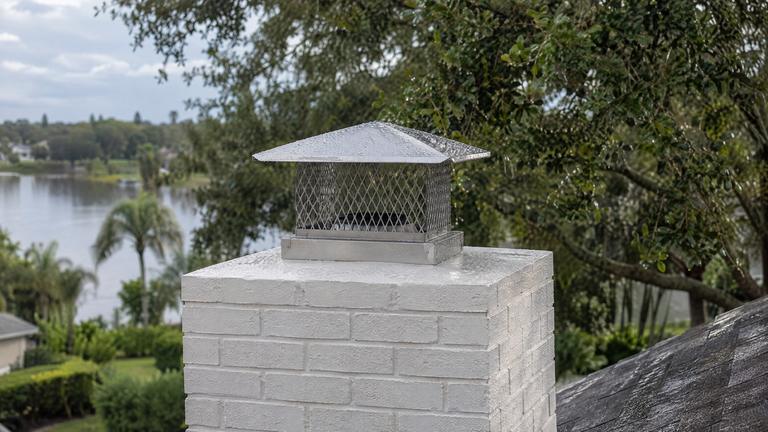
Careful chimney animal removal for Storey Park homes
A screened cap, a clean flue and a written record for your Storey Park home once the animal has lawfully left.
- Licensed & insured
- Locally run
- Family owned and operated
- Same-day service available



How we price animal work in Storey Park chimneys
- Firebox cleaned after removal
- Chimney sweep after nesting
- 10% off any service booked within 72 hours
- Timing set around protected species
Getting animals out of Storey Park chimneys the right way
No poison, repellents or traps in the flue
Poisons, mothballs and chemical repellents do not belong in a chimney. Fumes and residue end up in the house, a poisoned animal may die where it cannot be reached, and some products are illegal to use that way. Traps set inside a flue are hard to check and can injure an animal without removing it. We rely on lawful removal, cleanup and a screened cap instead. Fumes from repellents can also linger in the masonry and come back into the room the first time the fireplace warms up.
Damper damage after nesting
Nesting and a trapped animal's struggle can jam a damper, bend its plate or break its handle. After cleanup, we open and close the damper, check how well it seals and look at its frame. A damper that no longer closes fully lets animals and outside air into the room. If it needs repair, we describe it as a separate item with its own price. A damper that works again also gives you a barrier the next time something falls into the flue.
The listed cap for a factory-built chimney
A factory-built chimney must be terminated according to its manufacturer's instructions, and the cap is part of that listed system. If an animal got past the cap on a prefabricated fireplace, the replacement should be the cap approved for that model. We read the listing label, identify the chimney series and quote the correct cap. A generic screened cap is not a substitute on these systems. The listed cap may take a little longer to arrive, and the damper stays closed while we wait for it.
The order the work follows
Chimney animal jobs go wrong when steps are skipped, so we follow a set order. Each step waits for the one before it, and the estimate shows where your chimney stands in the sequence. Skipping to the cap is the one shortcut we refuse, because it is how animals end up trapped.
- Identify the animal and whether it is nesting
- Lawful removal, departure or exclusion
- Cleanup of nest material and droppings, then a sweep
- Flue and damper inspection
- A screened cap or other exclusion to keep it empty
Other work in Storey Park
-
-
-
-
-


Chimney animal questions from Storey Park
What does the code say about a chimney cap screen?
For masonry chimneys, the Florida residential code (R1003.9.2) calls for screen openings that do not pass a 1/2 inch sphere nor block a 3/8 inch sphere, a net free area at least four times the flue outlet and a screen that can be removed for cleaning. We size the cap to those rules.
Will a cap stop animals from coming back?
A screened cap that fits the flue closes the flue opening itself. We also look for gaps at the crown, the chase cover and the roofline, and if we find another way in, we explain it and price it separately.
Request your free estimate
Share the job details and arrange a free inspection with our local team.
- Free inspection
- No hidden fees
- Family owned and operated
Need an answer now? Call (352) 675-6376
Your request is received
Thank you. We will contact you to discuss the job and confirm an appointment.