
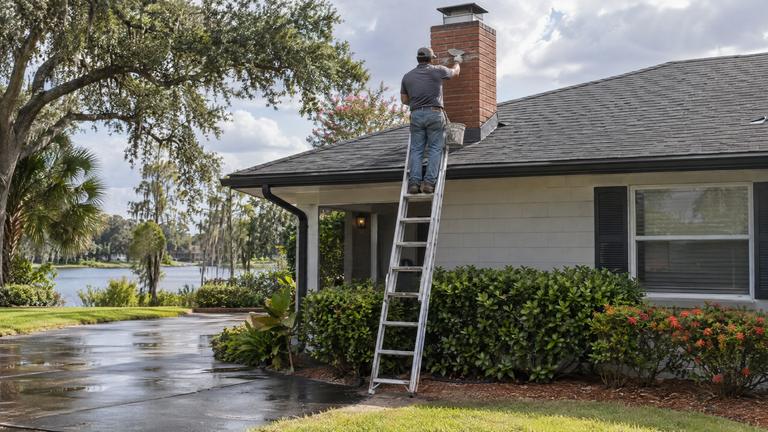
Your local chimney repair team in Taft
Our family-owned crew repairs crowns, flashing, brick, liners and chases for Taft homes, with every price in writing first.
- Licensed & insured
- Locally run
- Family owned and operated
- Same-day service available



Every repair named before work begins
- Crown condition, slope and drip edge
- Step flashing along the chimney sides
- Mortar joints to repoint, marked by area
- Weep holes and through-flashing at a veneer base
Chimney repair from the cap down to the firebox
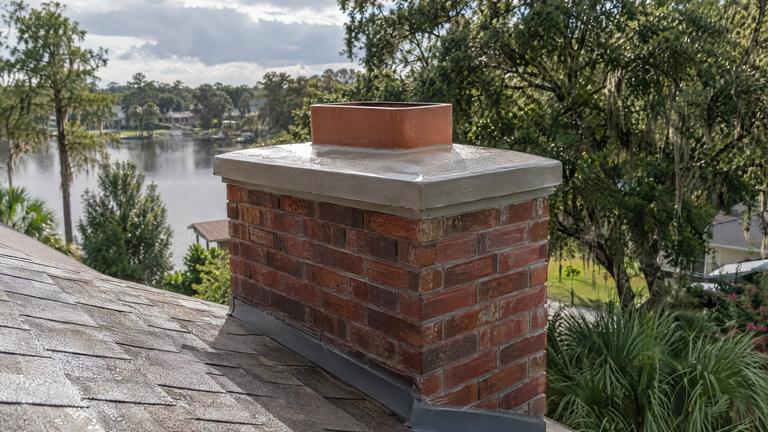
Hairline cracks in a concrete crown
Fine cracks in a concrete crown do not always mean it was built badly. BIA guidance on chimney construction calls shrinkage of concrete as it cures a certainty, and it recommends reinforcement in a cast crown to help control cracking from shrinkage and from heating and cooling.
What matters is what the cracks let through. A few fine lines in a crown with a good slope and sound edges are a different case from cracks that cross the full width, reach the flue liner or have let water stain the brick underneath. The first is a small repair. The second can mean water is reaching the masonry, and the crown may need replacing rather than patching.
Width, length and pattern are all checked, along with the brick directly below. The estimate names one of the two options and sends the work to our chimney crown repair service, with the reasoning written beside it.
Spark arrestor screens and their size
Some chimney caps carry a mesh screen around their sides. That screen is a spark arrestor, and on a masonry chimney the Florida Building Code lists what it has to meet.
A spark screen only helps while its mesh is open. Soot, creosote or leaves packed into it cut down the opening the smoke has to pass through, which works against the open area the code sets.
Where a screen is clogged, bent or rusted through, our crew checks whether cleaning will do or the cap needs replacing, and whether a replacement is sized for your flue. Screen and cap then share one priced line.
- Its open area is at least four times the open area of the flue outlet
- The screen resists heat and corrosion
- It can be reached and removed so the flue can be cleaned
After a chimney fire, keep the chimney out of use
Creosote is a black or brown combustible residue that forms when smoke condenses on the cooler walls of a flue. DuraVent's chimney instructions describe ignited creosote as an extremely hot fire, and they say not to use the chimney again until it has been inspected for possible damage.
If a fire is burning in the chimney now, get everyone out of the house and call 911. Nothing about the flue matters until the fire department says the house is safe.
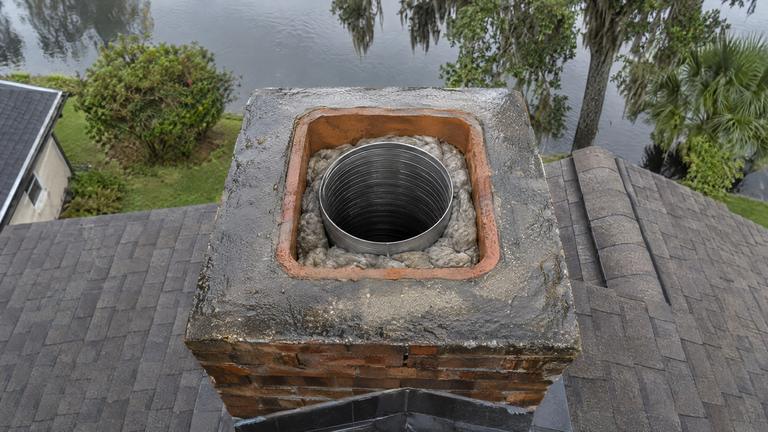
Once it is out, the flue stays unused until that inspection is done. It looks for cracked or displaced flue tiles, open joints, damage to the smoke chamber and damper, heat damage at the top and anything scorched where the chimney meets framing. Our chimney inspection service handles that work, and each repair it finds is priced on a written estimate.
Why new mortar looks different at first
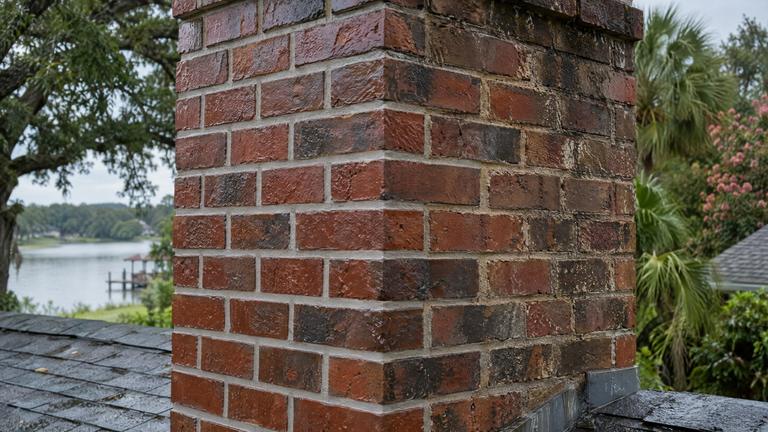
New mortar next to old often looks wrong on the day it goes in. Fresh mortar is damp and reads darker or chalkier, while the joints around it have weathered for a long time. Color also shifts as mortar dries, so what you see that afternoon is not the finished look.
Brick Industry Association guidance on repointing says new mortar should match the color of the existing joints where only part of a wall is redone, using pigments where needed. It recommends comparing a new sample with the old mortar while both are wet, then comparing fully dried samples with dry existing mortar, and notes that several sample batches may be needed.
Even a close match can look a little brighter until it weathers in. On a repair where appearance matters to you, samples can be compared wet and dry before the joints on your Taft chimney are filled, and the estimate states whether color matching is part of the job.
Other work in Taft
-
-
-
-
-
-


What homeowners ask about chimney repair
What parts of the chimney does your repair service cover?
All of it, from the cap and crown down through the flashing, brick, mortar, flue lining, smoke chamber and damper, plus framed chases and factory-built chimneys. Each damaged part gets its own line on the written estimate. When a part has its own specialist service with us, such as liner installation, the estimate says so.
Is the inspection really free, with no obligation?
Yes. You pay nothing for the inspection or the written estimate, and going ahead is entirely your call. If you do approve the work within 72 hours after the inspection, 10% comes off.
Request your free estimate
Share the job details and arrange a free inspection with our local team.
- Free inspection
- No hidden fees
- Family owned and operated
Need an answer now? Call (352) 675-6376
Your request is received
Thank you. We will contact you to discuss the job and confirm an appointment.