
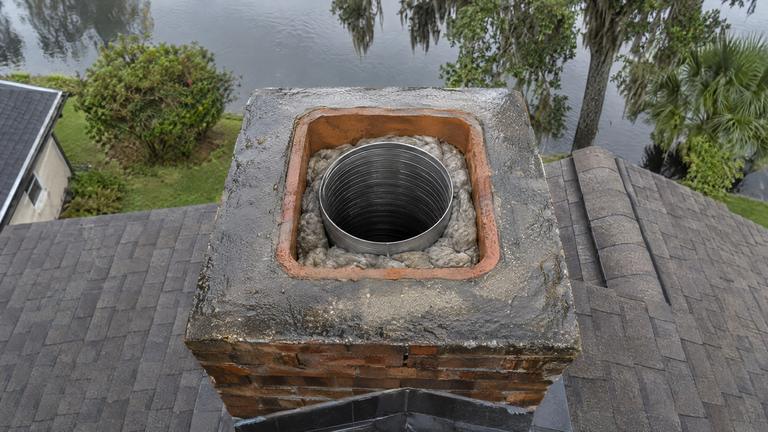
Chimney liner replacement in Washington Shores
Cracked tile, a new stove or an inspector's note? Local specialists in Washington Shores explain the relining options before you commit.
- Licensed & insured
- Locally run
- Family owned and operated
- Same-day service available



Your free flue inspection in Washington Shores looks at
Flue size, route and appliance come first. Our Washington Shores crew records these before any relining price is set.
- Liner length from base to top
- Cleaning of the flue and smoke chamber
- Removal of old tile or an old liner
- Room and roof protection during the work
Our approach to chimney liners in Washington Shores
Worth reading before you approve a liner for your Washington Shores home.
Adding, removing or changing an appliance
NFPA 211 also calls for that closer inspection when an appliance is added or removed, or replaced with one of a different type, input rating or efficiency. A new stove, a retired furnace or a switch in fuel can each change what the flue has to handle.
Tell us about planned changes before anything is sized. A liner chosen for the old arrangement may not suit the new one, and relining twice is an expense nobody wants. If the new appliance is already chosen, bring its model number or manual to the inspection so the flue can be checked against it.
Too large a flue for a solid-fuel appliance
For solid fuel appliances, one listed liner maker sets the liner's cross-sectional area at no less than the appliance outlet collar and no more than three times it. A big fireplace flue serving a small stove can sit far outside that range.
Relining brings the passage back into proportion. The estimate shows both measurements, the collar and the flue, so you can see the reasoning rather than take it on trust. A flue that is far too big stays cool, drafts slowly and gathers deposits, which is often what the homeowner noticed first.
A tee and cap for cleaning at the base
On a stove connection, the liner often ends at a tee. Its removable cap lets the sweep take soot out through the base of the system instead of pushing it back into the appliance.
We place the tee where it can be reached, show you where it is before we leave and note it in the paperwork for whoever sweeps the chimney next. A tee buried behind a finished wall with no way to open it defeats its purpose, so reachability is part of the design, not an afterthought.
Rust streaks below an old liner top
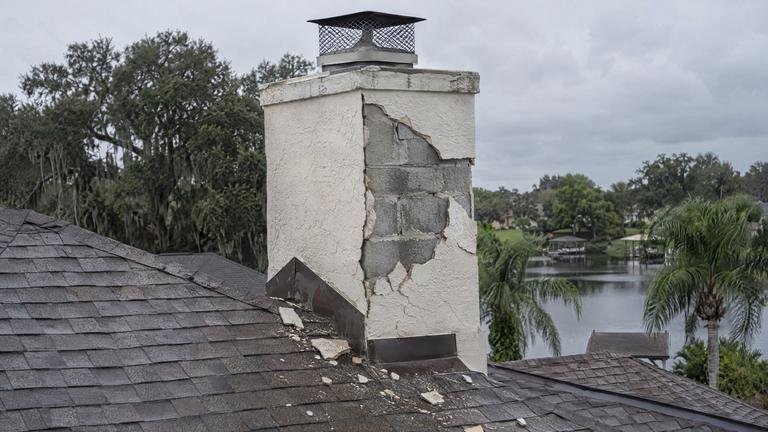
Rust running down the crown or the masonry below a metal liner top can come from a failing cap, corroded clamps or a liner not suited to its appliance. The streak shows where to look, not what failed.
We check the cap, plate, clamps and liner end, and tell you which part needs attention. Sometimes a single part can be replaced, and sometimes the corrosion reaches the liner itself, in which case replacement of the whole system is the honest recommendation.
Other work in Washington Shores
-
-
-
-
-


Learn more about chimney liner installation and reliningWashington Shores services
Related chimney liner work

Liner questions we hear in Washington Shores
No sales pitch, only answers from our liner specialists in Washington Shores.
How do you choose the liner size?
From the appliance first. For a stove we follow its outlet size or the maker's instructions, and for an open fireplace we measure the opening. We then check that size against the chimney route before anything is ordered.
How do I get 10% off relining in Washington Shores?
Mention the offer when you book in Washington Shores, and book within 72 hours after your free inspection. 10% comes off any service booked in that window and shows on the written estimate.
Request your free estimate
Share the job details and arrange a free inspection with our local team.
- Free inspection
- No hidden fees
- Family owned and operated
Need an answer now? Call (352) 675-6376
Your request is received
Thank you. We will contact you to discuss the job and confirm an appointment.