
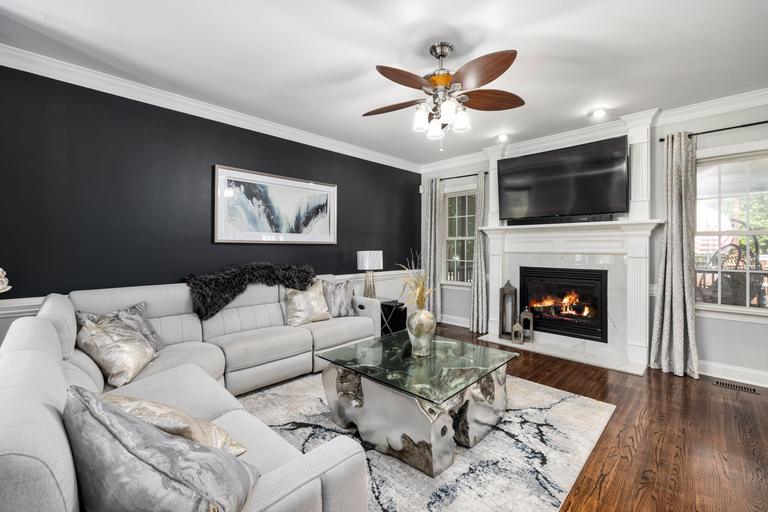
Natural and cultured stone chimney repair in Winter Garden
Stone chimney work in Winter Garden done carefully by a locally owned crew, and if it is not right, we return and fix it.
- Licensed & insured
- Locally run
- Family owned and operated
- Same-day service available



Line by line on your stone chimney in Winter Garden
Honest stone prices in Winter Garden come from checking these items up close.
- Joint depth and mortar condition checked
- Mortar color, sand and joint profile matched
- Earlier hard cement or caulk patches noted
- Roof, landscaping and walkways protected
How we repair stone chimneys in Winter Garden
Short reads that help before you approve stone work in Winter Garden.
Flashing where the stone starts and stops
The maker's instructions call for corrosion-resistant flashing or weep screed and a means of drainage at all penetrations and terminations of the stone cladding, with flashing type and locations following the applicable building code.
On a chimney, those edges include the roof line, the top under the cap and any trim transitions. Missing or failed flashing at an edge can explain water behind stone, so we check every edge on the chimney.
How deep to rake out stone joints
The National Park Service's Preservation Brief 2 sets the raking depth at 2 to 2 and a half times the joint width as a minimum, so new mortar bonds and stays put. For stone masonry with wide joints, that can mean several inches.
Loose or crumbling mortar beyond that depth also comes out. The brief shows new mortar falling out of a joint that was not prepared deeply enough. We rake to a sound depth and show you the prepared joints before filling.
- At least 2 to 2 and a half times the joint width
- Deeper where mortar is loose
- Square back so new mortar locks in
Curing fresh joints on a stone chimney
High-lime mortars harden as they lose water and take up carbon from the air, and drying too fast can leave them chalky and weak. Preservation Brief 2 describes misting repointed areas with a fine spray for a day or two and covering walls with burlap for the first three days, with any plastic tented away from the wall.
What we do depends on the mortar and the day. We protect new joints from hard rain and strong sun and leave you short notes on what to avoid while they cure.
Ledgestone and stacked courses
Ledgestone styles are laid in long, level courses, and one maker's directions say they should be installed from the bottom up, keeping each course level and plumb, with long pieces run horizontally.
A loose or missing piece breaks the line and is easy to spot. We reset pieces level with their neighbors, trim replacements to the course height and check alignment as we go, so the repair disappears into the pattern.
A yearly look at a stone chimney
NFPA 211 expects every chimney, fireplace and vent to be inspected yearly at the least. For a stone chimney, that yearly visit covers the flue and the stonework together.
We tap the stones, check the joints and look at the cap, flashing and base each time. Most years the answer is a routine note. The written record helps spot small changes early, before a loose stone becomes a missing one.
Other work in Winter Garden
-
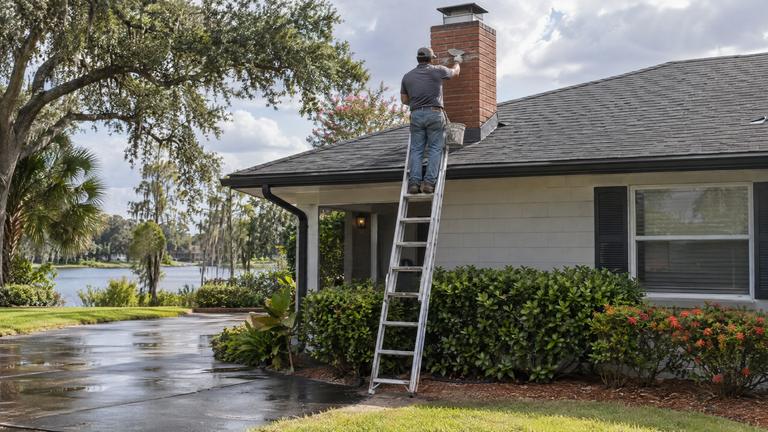
-
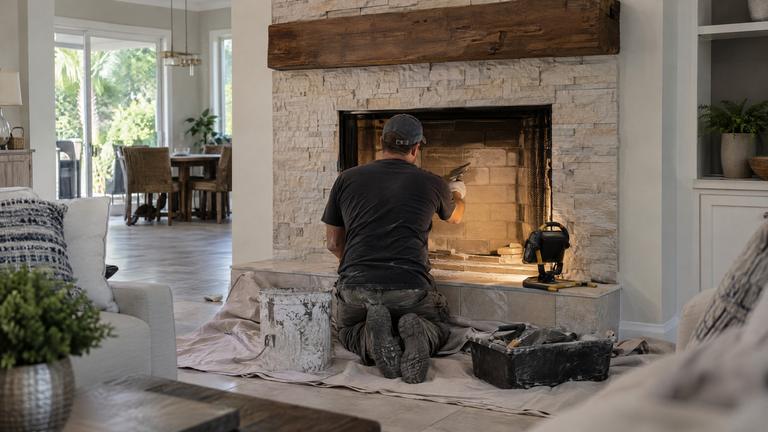
-
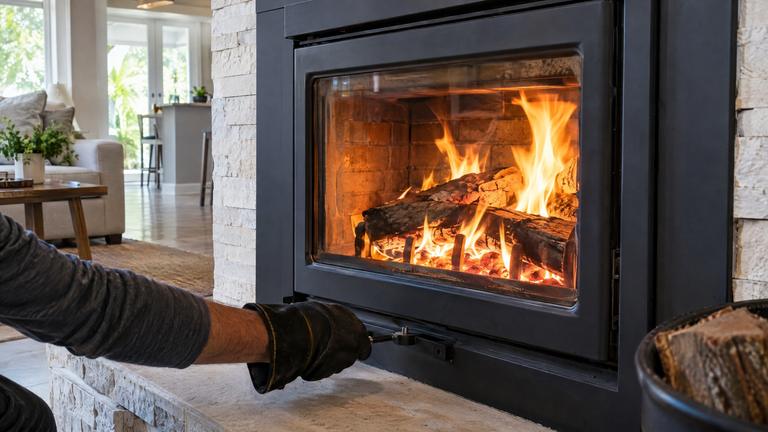
-
-


Stone chimney questions from Winter Garden
Short answers from the crew that repoints stone in Winter Garden. Call with anything else.
Why do you use a softer mortar on stone?
Repointing mortar should be softer and more vapor permeable than the stone around it, so moisture leaves through the joints and any stress is taken by mortar that can be replaced. Mortar that outlasts the stone in hardness tends to push the damage into the stone faces instead.
How often should a stone chimney be inspected?
Under NFPA 211, a chimney, its fireplace and its vents are inspected every year at a minimum. For a stone chimney, that yearly visit is a good time to tap the stones, check the joints and look at the cap and flashing.
Request your free estimate
Share the job details and arrange a free inspection with our local team.
- Free inspection
- No hidden fees
- Family owned and operated
Need an answer now? Call (352) 675-6376
Your request is received
Thank you. We will contact you to discuss the job and confirm an appointment.