
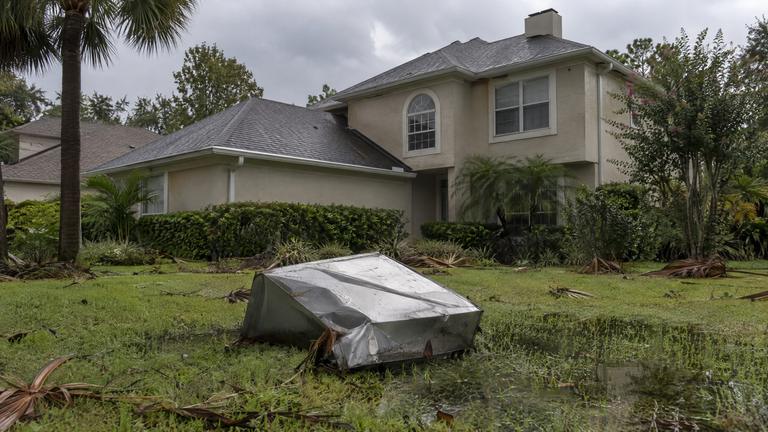
Chimney repair with a free inspection in Eagle Creek
Leaks, loose brick or a cracked crown? We trace the damage to its source and repair it properly.
- Licensed & insured
- Locally run
- Family owned and operated
- Same-day service available



What goes on a written chimney repair estimate
- Cracks mapped by location and pattern
- Rust on lintels, support angles and ties
- Damper plate, frame and handle
- Items for an engineer's evaluation, listed separately
Getting your Eagle Creek chimney back in shape
Loose stones on a stone veneer chimney
Some stone chimneys are built of solid stone, while others carry the stone as a veneer, one outer layer set against a framed or block chimney behind it. A stone that rocks, drops or shows an open joint around its edge has lost its bond to that backing.
Where masonry veneers a frame chimney, the Florida Building Code requires through-flashing and weep holes so water that gets behind the stone can drain back out. A veneer built without them, or with them buried in mortar, has no way to shed that water.
Our stone chimney repair service chooses between resetting stones and taking down a section. On your Eagle Creek home the estimate names the stones or courses involved and which of these applies.
- A few loose stones on sound, dry backing are reset
- Wet or soft backing behind the stone is repaired first
- Missing flashing at the base means rebuilding that course
- Wide movement across the face points to a section rebuild
Fireblocking where the chimney passes floors
The air space around a masonry chimney stops at each floor and ceiling it passes through. There the Florida Building Code requires fireblocking of noncombustible material, securely fastened, so flame and hot gases cannot travel up the gap. Between wood joists and the chimney it must be self-supporting or rest on strips of metal or metal lath.
The same code asks for fireblocking in concealed spaces of wood-framed walls at ceiling and floor levels, and around openings for vents, pipes and ducts. A framed wall or chase built around a chimney is that kind of concealed space.
Fireblocking can be missing, loose or made of wood or foam that does not belong at a chimney, and it tends to come to light only when a ceiling or wall is opened for some other reason. When a chimney wall or ceiling in your Eagle Creek home is opened for a repair, the fireblocking is checked, and restoring it in noncombustible material is priced on the estimate.
Cleaning comes before a masonry flue repair
Under NFPA 211, chimneys, fireplaces and vents get looked at every year for soundness, built-up deposits and correct clearances, and they are cleaned, kept up or repaired wherever that look shows a need. Deposits sit in the same sentence as soundness for a reason. A flue lined with soot and creosote hides the surface you need to judge.
Cracked tile, open joints and flaking parging all sit under that coating. EPA wood-burning guidance says creosote tends to build up with restricted air, unseasoned wood and a chimney that runs cooler than normal, so a flue that has seen heavy use can carry enough of it to hide real damage.
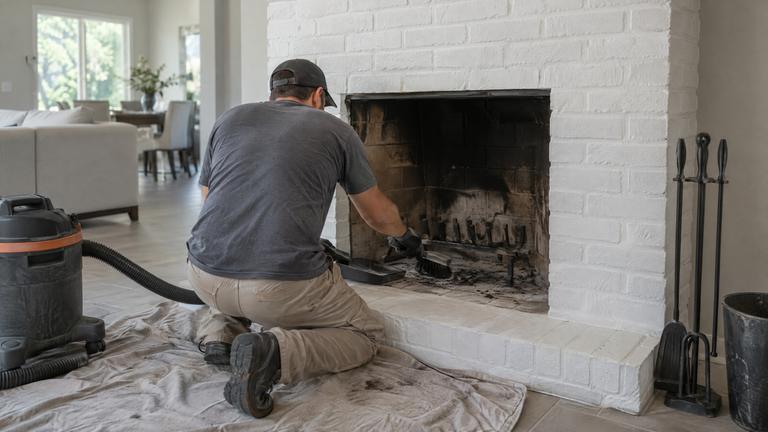
That is why a repair on a used masonry flue normally starts with a sweep. Our chimney sweep service cleans the flue first, and the lining is judged bare. For your Eagle Creek home, the sweep and the repair appear as separate lines so the order of the work is clear from the start.
Carbon monoxide alarms and a fuel-burning fireplace
CDC advice is to install battery-operated or battery back-up carbon monoxide detectors near every sleeping area in the home. NFPA heating safety tips say to install and maintain CO alarms, and they add that all fuel-burning equipment should be vented to the outside to avoid CO poisoning. A home with a fireplace or any other fuel-burning appliance needs them.
An alarm that goes off is not a chimney question. Get everyone out of the house and call 911 from outside. The cause gets tracked down only after the fire department has cleared the home.
Where a chimney comes in is venting. CDC guidance notes that chimneys can be blocked by debris, which can cause carbon monoxide to build up inside a home, and a cracked liner or a damper stuck closed can also keep combustion gases from leaving the way they should. Our technicians check those parts during the free inspection, and any fault that affects venting goes to the top of the estimate, ahead of cosmetic work.
Other work in Eagle Creek
-
-
-
-
-
-


Your chimney repair questions, answered
How do I set up a chimney repair visit?
Call (352) 675-6376 or use the form, and tell us what you see and where on your Eagle Creek home. Same-day visits are available when the schedule allows. The visit starts with a free inspection, and you get a written estimate before any repair begins.
Do I need to go up on the roof to show you the problem?
No, please stay off the roof. Tell us what you noticed from inside and from the ground, such as a stain, fallen debris or a leaning cap. Our crew handles the access and the close look during the free inspection.
Request your free estimate
Share the job details and arrange a free inspection with our local team.
- Free inspection
- No hidden fees
- Family owned and operated
Need an answer now? Call (352) 675-6376
Your request is received
Thank you. We will contact you to discuss the job and confirm an appointment.