
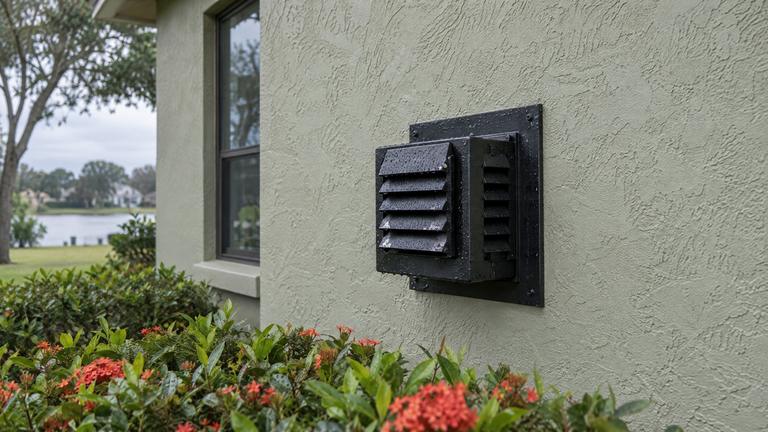
Gas fireplace venting in Lake Mary Jane
From a crushed cap to a joint that leaks exhaust back into the air side, our technicians find the vent fault and fix it the maker's way.
- Licensed & insured
- Locally run
- Family owned and operated
- Same-day service available



Line by line, your venting proposal in Lake Mary Jane
Each point below is measured or checked at your Lake Mary Jane home and matched to the fireplace manual before it reaches your estimate.
- Clearance from the cap to windows and doors that open
- Roof penetration, storm collar and flashing
- Glass door seal and latches on direct-vent units
- Finish repairs after access, priced line by line
Gas fireplace venting explained for Lake Mary Jane homeowners
How our local crew reads a gas fireplace vent at your Lake Mary Jane home, from the cap back to the firebox.
Firestops on a B-vent run
B-vent passes through ceilings and floors with a firestop at each framed level. One B-vent fireplace manual sends the installer to the vent maker's instructions for firestop sizes and notes that only one firestop is needed per frame.
The same manual asks installers to avoid cutting load-bearing framing to make room for the vent. Our crew checks each firestop it can reach and flags any framing that was cut, since a structural fix is separate work and is quoted on its own line.
Type B pipe, listed for gas
B-vent is double-wall pipe made for gas appliances with draft hoods. Section 503.6.1 of Florida's fuel gas code calls for Type B and BW pipe listed under UL 441, and one fireplace manual insists on Type B pipe carrying a listing from a nationally recognized testing agency.
The same manual sizes the vent by model, 4 inch pipe for one and 6 inch for others. Pipe that is too large or too small shows up in that manual's poor-draft troubleshooting, so our pros check the size as well as the type.
How high a B-vent cap sits above the roof
Roof pitch sets the minimum height of a gas vent cap above the roof. One B-vent fireplace manual's table starts at 1 foot for roofs from flat to 7/12 and climbs to 5 feet for pitches over 12/12 up to 14/12.
The Florida fuel gas code has its own pitch table in section 503.6.5, and section 503.6.7 calls for the vent to end with a listed cap or listed roof assembly. Our pros check the cap, its height and the pitch, and they use the larger requirement.
Looking inside a framed chase
A framed chase hides the vent between the fireplace and the roof. Some have an access panel, and many do not. One B-vent fireplace manual asks for the chase to be insulated like an outside wall while keeping clearances to the pipe.
Our crew checks whatever the chase lets us reach and states what it could not see. If opening the chase is the only way to settle a question about the vent, the estimate shows the access and the patch as their own lines.
Direct-vent pipe that runs up through the roof
Vertical direct-vent runs have their own limits. One maker allows vertical installations up to 40 feet with at least 8 feet of vertical rise, and up to 10 feet of horizontal run within the system using no more than two 90 degree elbows.
Each 45 degree elbow on the horizontal plane cuts that 10 feet by 18 inches in the same manual. Our pros check the rise, the horizontal sections and the elbows they can reach, then the collar and cap on the roof.
Other work in Lake Mary Jane
-
-
-
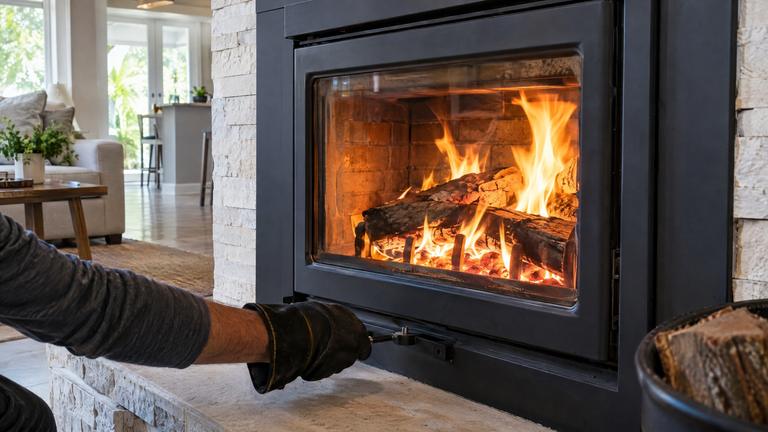


- Fireplace RestorationBring an unused fireplace back with a coordinated plan.
- Ventless Gas Fireplace ServiceService the unit within its exact installation limits.
- Stone Chimney RepairKeep stone repairs suited to the existing masonry.
Learn more about gas fireplace ventingLake Mary Jane services
Fireplace vent questions from Lake Mary Jane, answered
Questions Lake Mary Jane homeowners raise about gas fireplace vents, answered by our family-owned team.
Can a gas insert vent through an old masonry chimney?
Many can, with a pair of flexible liners down the flue, one bringing air in and one taking exhaust out, where the manual allows it. One maker permits that only in a solid-fuel fireplace and chimney that serves no other solid-fuel appliance. We check the chimney and the manual first.
Can attic insulation touch the vent pipe?
No. One maker asks for air space all around the pipe and warns against packing it with insulation, which can cause high temperatures. Where the pipe passes into an attic, a firestop or insulation shield keeps that space open.
Request your free estimate
Share the job details and arrange a free inspection with our local team.
- Free inspection
- No hidden fees
- Family owned and operated
Need an answer now? Call (352) 675-6376
Your request is received
Thank you. We will contact you to discuss the job and confirm an appointment.