
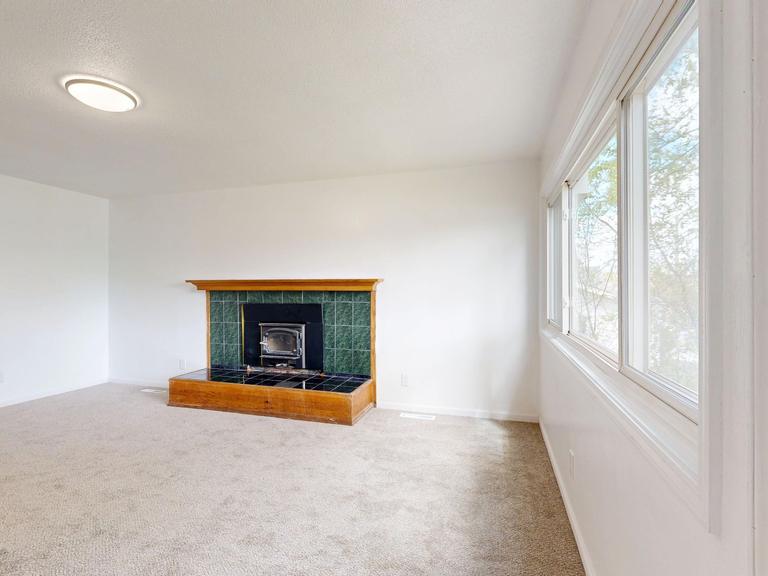
Chimney chase repair and framing work in Sky Lake
Honest chase repair. We fix what is rotted, keep what is sound and show you the line in writing.
- Licensed & insured
- Locally run
- Family owned and operated
- Same-day service available



Chase repair lines priced before any work
- Air space around the chimney pipe kept clear
- Firestops, shields and pipe supports reset as listed
- Roofer coordination at the chase base
- Added work priced in writing before it starts
Chimney chase repair, explained for Sky Lake homeowners
Open siding joints that let rain behind the finish
Siding on a chase takes wind-driven rain on all four sides, and the joints are the weak spots. Butt joints, where two boards meet end to end, open up as the boards dry and shrink. Nail holes near those ends can let water into the board itself. Joints in the lowest course and just under the top tend to take the most water.
Once water is behind the siding, the barrier underneath has to carry it down and out. If that barrier is torn or missing, the sheathing takes the water instead.
On a chase in Sky Lake, our crew looks at every joint on every face, including the side nobody sees from the street. Open joints on sound boards can be sealed or backed with flashing. Boards that are swollen or split at the ends are replaced, and the barrier behind them is checked before new siding goes up.
Giving water that gets past the siding a way out
Siding and stucco both let a little water through. Section R703.1.1 of the Florida Building Code describes an exterior wall that keeps water from building up inside it, using a water-resistive barrier plus a way to drain water that gets past the cladding back to the outside.
On a chase, that drainage path ends at the bottom edge of the siding or at the flashing on the roof. If the bottom edge is caulked shut or buried in roofing cement, water that should drain out stays in the wall.
We check that the base of each chase wall can drain. Sealant that blocks the path comes out, and the bottom edge is detailed so water leaves the wall at the flashing. That detail is written into the estimate, so it does not get lost between trades.
The screed along the bottom edge of the stucco
Stucco on a framed wall needs a clean stop at the bottom. A screed is a metal or plastic strip fastened along the base of the wall, and the stucco is finished against it. R703.7.2 says that on wood-frame construction with an on-grade floor slab, exterior plaster covers the lath, paper and screed but does not extend below them.
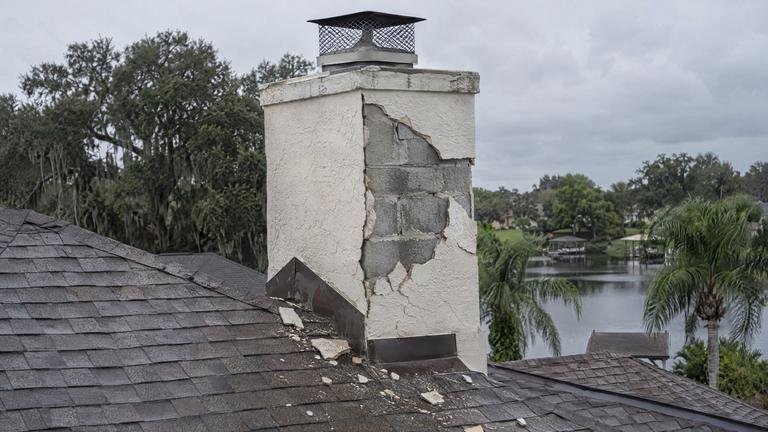
When stucco runs past the screed onto the roof, a slab or the flashing, water draining down the barrier has no way out. The bottom edge stays wet, and over time the plate behind it can rot.
On a stucco chase in Sky Lake, our crew checks where the stucco stops at the base and along any roof line. If it runs past the screed or is buried in roofing, we cut it back to a clean edge so water can leave the wall. That edge detail is written into the scope, since it is easy to lose once the finish coat goes on.
Chimney height when a chase is rebuilt
Rebuilding a chase brings up the height of the chimney above the roof. As one maker's example, DuraVent's DuraChimney II manual quotes NFPA 211 as saying a chimney extends at least three feet above the highest point where it passes through the roof and at least two feet higher than any part of a building within ten feet.
A rebuild that makes the chase shorter, or a roof change that raises the ridge beside it, can leave the chimney too low. The chimney maker's instructions for your system set the final termination details.
Our crew measures the termination before and after a rebuild and checks it against those instructions. If the chimney needs to be taller, the added listed sections appear on the estimate, so the finished height is part of the plan and not an afterthought.
Other work in Sky Lake
-
-
-
-
-
-


Questions about your chase in Sky Lake
Can you repair only the rotted part of my chase?
Often, yes. When rot is limited to the base, a corner or the top, our crew removes siding in that area, replaces the damaged wood and laps new barrier and flashing into the old. If probing shows rot running through most of the framing, we price a rebuild alongside the repair so you can compare.
How long will my chase be open to the weather?
That depends on how much of the wall comes off and on curing time if the finish is stucco. We give you the plan at the start, and any open section is covered before the crew leaves each day.
Request your free estimate
Share the job details and arrange a free inspection with our local team.
- Free inspection
- No hidden fees
- Family owned and operated
Need an answer now? Call (352) 675-6376
Your request is received
Thank you. We will contact you to discuss the job and confirm an appointment.