
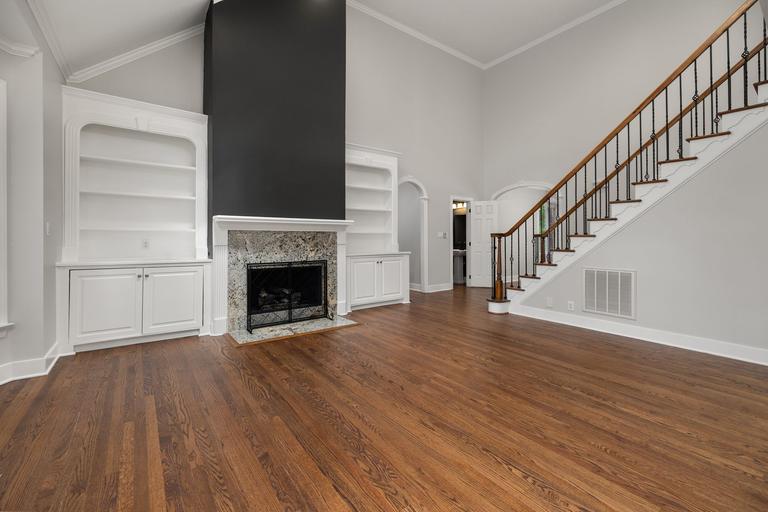
Honest chimney chase repair for West Colonial homes
Framing, sheathing, barrier, flashing and finish, each priced on its own line before a single board comes off.
- Licensed & insured
- Locally run
- Family owned and operated
- Same-day service available



What your chase estimate lists in West Colonial
- Tap test for hollow or loose stucco
- Stucco rebuilt in three coats over new lath
- Water-resistive barrier lapped upper over lower
- Roofer coordination at the chase base
Chase repair facts for West Colonial homes
Soft studs and plates inside the chase
Studs and plates are the bones of a chase. Rot in framing tends to start at the ends, where end grain drinks water, so the bottom plate, the lower ends of the studs and the top plate are the places to check first. Corners matter too, since two walls share the corner studs and both drain toward them.
A stud that takes a probe easily, feels spongy or crumbles in hand has lost its strength. Several soft studs in one corner can let the chase sag or twist, which opens the siding joints and lets in even more water. A soft top plate also lets the cover settle.
Our crew in West Colonial replaces rotted plates and studs with new lumber, or sisters sound new wood alongside where the old stud is damaged at one end only. We tell you which method fits each stud, and why, before the wall is closed.
Sistering a stud or replacing it
Not every damaged stud has to come out. When rot is limited to the bottom few inches, a new stud can be fastened alongside the old one, which is called sistering, and the rotted end cut away. When a stud is soft along its length, it is replaced.
Plates are different. A rotted bottom or top plate is replaced in sections, since sistering a plate seldom helps. Corners, where two walls meet, get new framing so the chase stays square. Sistered studs are fastened along their full length, using straight, dry lumber so the new stud stays true.
Any new framing keeps the listed air space around the chimney pipe. We explain each choice on your West Colonial job and write down what was sistered and what was replaced, so the next person to open the wall knows what they are looking at.
Firestops where the pipe passes a floor or ceiling
Where a factory-built chimney passes through a floor or ceiling, the chimney maker calls for a firestop, a metal plate that closes the framed opening while keeping the air space around the pipe. DuraVent's DuraChimney II instructions, for example, call for a firestop at every floor and ceiling level, including where the chimney enters the attic, but not at the roof.
The Florida Building Code, in R302.11, also calls for fireblocking in concealed spaces of wood-framed walls at ceiling and floor levels. Each plate is fastened to the framing as the maker shows, with the air space around the pipe left open.
Each firestop gets checked for position, fastening and damage whenever a chase is opened. Missing or damaged firestops are replaced with the chimney maker's listed part, and any that were missing are pointed out to you before the chase on your West Colonial home is closed.
The insulation shield at an insulated attic
When a factory-built chimney passes through an insulated attic, the insulation has to be held back from the pipe. Florida's code, in R1005.8, calls for an insulation shield that keeps insulation at the clearance the chimney maker specifies, and where the chimney passes through attic space, the shield ends above the insulation.
DuraVent's DuraChimney II manual, as one example, calls for its attic insulation shield where the chimney passes into an attic, unless the chimney is fully enclosed through the attic. The same maker's DuraTech instructions say an installed shield must be high enough to cover current or future insulation. Insulation added in later years is worth checking against the shield height.
On roof-mounted chases, our technicians look at the attic side of the chimney during the inspection when it can be reached. A missing or buried shield is written up with the chase repair, since the two share the same opening.
Other work in West Colonial
-
-
-
-
-


Before you book chase repair in West Colonial
Do you charge to look at my chase?
No. The inspection and the written estimate are free, with no obligation to book the repair. If the chase only needs small fixes, we tell you that too.
What happens to the chimney pipe while you work on the chase?
The pipe stays in place and is protected while the framing around it is replaced. Our crew keeps the listed air space clear and puts firestops, shields and supports back where the chimney maker's instructions call for them.
Request your free estimate
Share the job details and arrange a free inspection with our local team.
- Free inspection
- No hidden fees
- Family owned and operated
Need an answer now? Call (352) 675-6376
Your request is received
Thank you. We will contact you to discuss the job and confirm an appointment.